Mushrooms on the grass
Fungi on the lawn - recognition and treatment
Even the most well-maintained lawn can be affected by fungal diseases. The wet weather, excessive watering and lack of air in the soil create an ideal environment for the development of fungi. They appear in the form of spots, discoloration and thinning of the grass. In this article, we'll look at how to recognize the different types fungus on the grass and how to treat them effectively, to restore a green and healthy lawn.
Content
- Symptoms and types of fungus
- Main reasons for their appearance
- Treatment and prevention
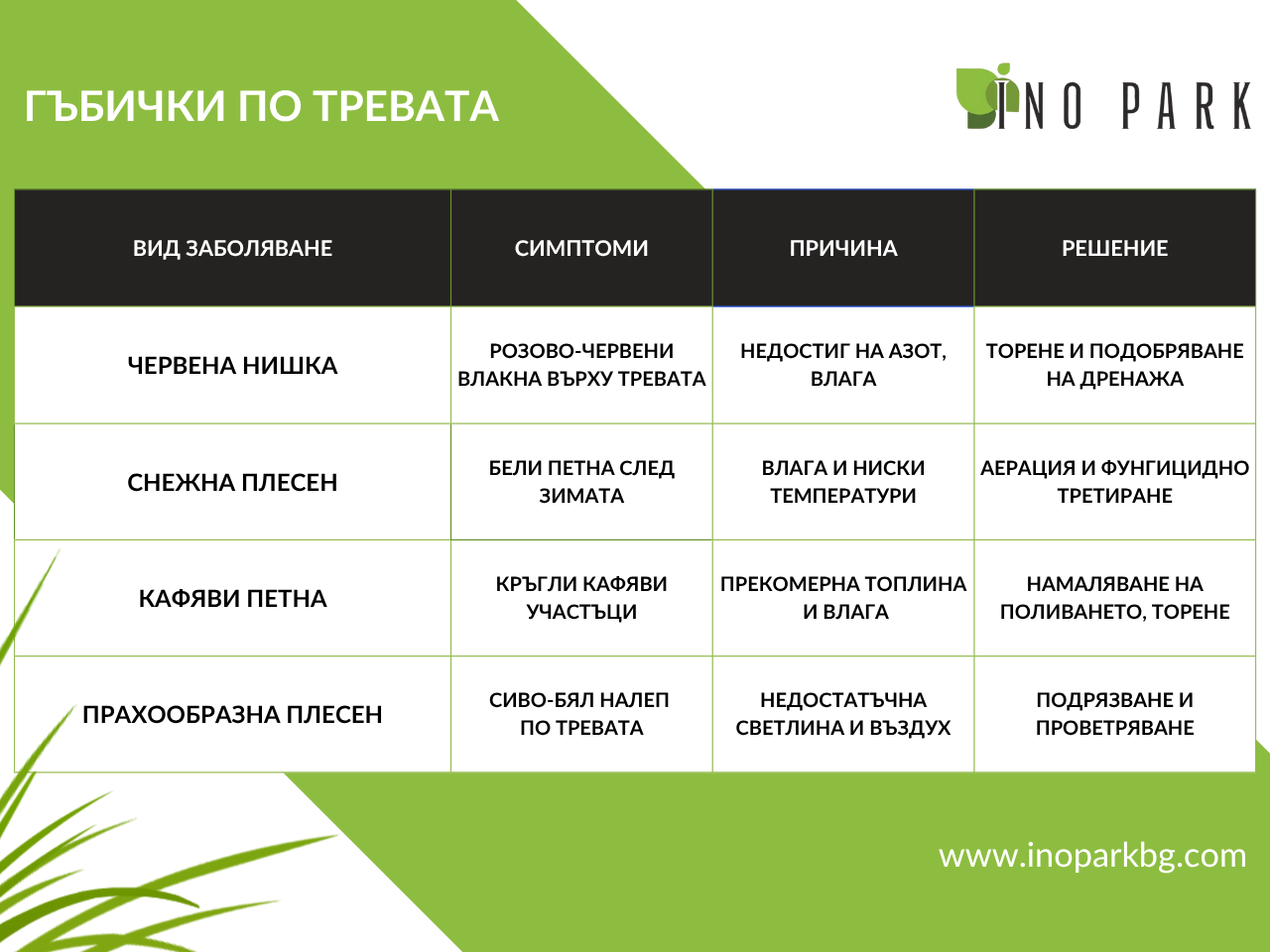
- Table: types of fungal diseases
- Frequently asked questions
- Conclusion
Symptoms and types of fungus
Fungi on grass can appear in different ways - from small yellowish spots to large brown areas. Here are some of the most common types:
- Powdery mildew – gray-white plaque on the leaves, often in densely sown grasses.
- Red thread (Red Thread) – reddish fibers on the tips of the grass in case of nitrogen deficiency.
- Snow mold – appears after snow melts, forms white circles.
- Brown spots – a result of excessive moisture and high temperatures.
Main reasons for their appearance
The most common factors, leading to fungal diseases, with:
- Excessive or uneven watering.
- Insufficient aeration and compacted soil.
- Lack of nutrients, especially nitrogen.
- Improper mowing - too low or irregular.
- High humidity and shady areas without air circulation.
Treatment and prevention
Timely treatment can save the lawn and prevent the spread of infection. Here's what to do:
- Improve drainage – ensure good water drainage, especially after rainfall.
- Aerate the lawn – to improve the access of oxygen to the roots.
- Fertilize properly – use nitrogen fertilizers, which enhance grass growth.
- Avoid watering in the evening – moisture at night promotes the development of fungi.
- Use fungicides – in more severe cases, choose an appropriate preparation for the specific type of fungal disease.
Table: most common fungal diseases on grass
Frequently asked questions (FAQ)
1. Are fungi dangerous for pets??
Most lawn fungi are not dangerous, but some can cause skin irritations. Avoid contact, while the grass recovers.
2. Can I use home remedies??
Baking soda and diluted vinegar sometimes help in mild cases, but do not replace professional fungicide treatment.
3. How long does recovery take?
Usually 2–4 weeks with proper care and fertilization. In severe cases, seeding may be necessary.
4. When is the best time to treat the lawn??
Spring and autumn are ideal seasons for the prevention and treatment of fungal diseases.
Conclusion
The mushrooms on the grass are not just a cosmetic problem – they are a signal, that the lawn is out of balance. In most cases, the cause lies in a combination of excessive moisture, poor aeration and lack of nutrients. To keep your lawn healthy, it is important to react in time and take several consecutive steps: improving drainage, regular aeration, proper fertilization and avoiding excessive watering. The sooner you intervene, the greater the chances that the grass will recover without the need for reseeding or complete replacement.
Don't forget, that fungal diseases often appear after prolonged rainfall, improper mowing or lack of light - therefore prevention is the best remedy against them. Make it a habit to monitor your lawn regularly and apply light preventative care, even when the grass looks in good condition. This will save you time, funds and efforts in the future.
If the problem is repeated or covers large areas, seek professional help landscaping company. Specialists can make an accurate diagnosis, determine the causative agent and suggest the correct treatment. We at Ino park we have experience and knowledge, to help you restore and keep your lawn in prime condition – fresh, dense and resistant to external influences. Lawn care is not a one-time activity, but a constant process, which, when done with care and consistency!
 Check out more articles at USEFUL!
You can also follow us on our social networks: Facebook